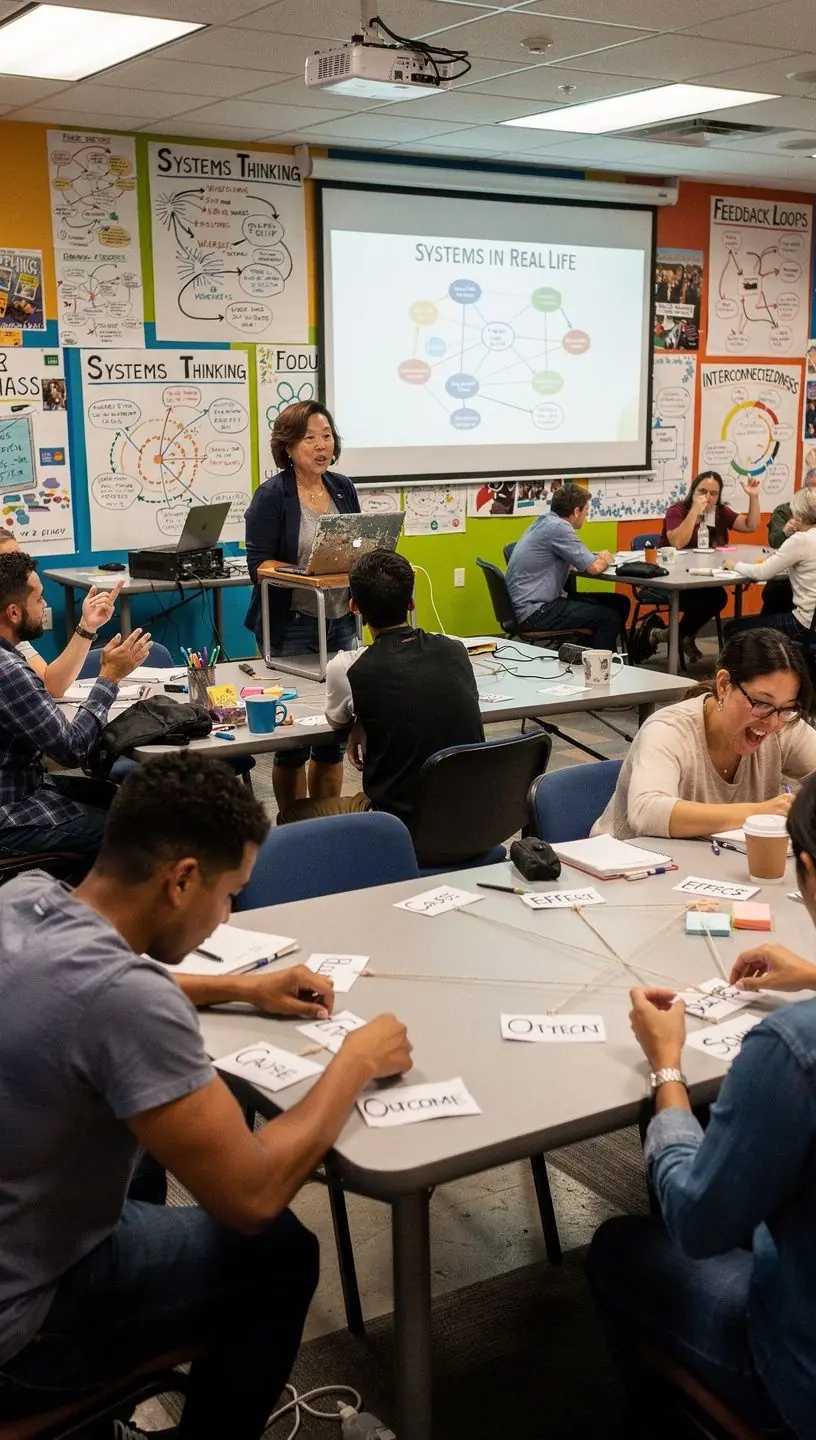
Exploring Systems Thinking in Urban Development
In the ever-evolving landscape of urban development, systems thinking offers a valuable framework for addressing complex challenges. This holistic approach allows city planners and decision-makers to better understand the interconnections within urban environments, leading to more sustainable and inclusive outcomes.
Understanding the Basics of Systems Thinking
Systems thinking is a methodology that emphasizes the relationships and interactions between various components of a system. In urban development, this means recognizing that cities are not just collections of buildings and roads; they are intricate networks of social, economic, and environmental factors. According to research by the American Planning Association, systems thinking can significantly enhance the effectiveness of urban planning initiatives by fostering a deeper understanding of these relationships.

"Systems thinking encourages us to look beyond immediate problems and consider the broader context in which they exist." - Urban Planning Expert
Key Principles of Systems Thinking
- Interconnectedness: Recognizing that every element of a city, from transportation to housing, influences others. This interconnectedness means that a change in one area can ripple through the entire system.
- Feedback Loops: Understanding how actions lead to reactions, which can either amplify or mitigate issues. For instance, increasing public transportation options can reduce traffic congestion, which in turn may lead to enhanced local economies.
- Holistic Perspective: Addressing problems with a focus on the whole system rather than isolated components. Effective urban development considers the social and environmental impacts of each decision.
Practical Applications in Urban Development
Implementing systems thinking in urban development typically involves several steps:
- Define the Problem: Clearly articulate the urban challenge faced. This involves gathering data and insights from various stakeholders, including residents, businesses, and local authorities.
- Analyze the System: Map out the relationships and feedback loops within the urban environment. This may include visual tools such as causal loop diagrams that illustrate how different components interact.
- Engage Stakeholders: Involve community members and experts throughout the planning process. Engaging diverse perspectives can lead to more innovative solutions and foster a sense of ownership among stakeholders.
- Implement and Evaluate: Roll out the developed strategies while continuously monitoring their impacts. Adjustments might be necessary to better align with the dynamic nature of urban systems.
Challenges and Considerations
While systems thinking offers a robust framework, it is essential to acknowledge the challenges it presents:
- Time Commitment: Implementing systems thinking can be time-consuming, often requiring several months for thorough analysis and stakeholder engagement.
- Complexity: The intricate nature of urban systems can make analysis daunting, necessitating specialized knowledge and expertise.
- Resistance to Change: Stakeholders may be hesitant to adopt new methodologies, especially if they are accustomed to traditional approaches.
Conclusion
Systems thinking provides a foundational approach to urban development that can lead to more sustainable and equitable cities. By understanding the complexities of urban environments and fostering collaboration, decision-makers can better address the multifaceted challenges that arise. As cities continue to grow and evolve, the principles of systems thinking will play an increasingly vital role in shaping resilient urban spaces for future generations.